
MIGS

Redefining Glaucoma Surgery with Trabecular Micro-Bypass Technologies

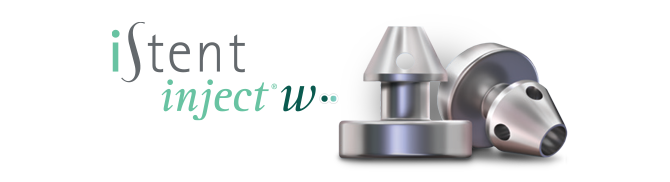
Glaukos started a revolution in glaucoma surgery and treatment with the development of the first Micro-Invasive Glaucoma Surgery device. To date, trabecular micro-bypass technologies such as iStent®, iStent inject®, and iStent inject® W have been implanted in over 800,000 eyes around the world, with more patients benefiting from these procedures every day.

Many physicians agree that restoring physiological outflow is preferable in the majority of patients. Compared to more invasive glaucoma surgeries with high complications and risks prolonged with postoperative recovery, MIGS procedures have minimal morbidity, fast recovery, and few complications.2*

As the corporate founder of MIGS, Glaukos revolutionized the traditional glaucoma treatment and management paradigm with the iStent® Trabecular Micro-Bypass Stent—the first MIGS device approved by the FDA. And with the FDA approval of iStent inject® and now iStent inject® W – the next-generation Glaukos trabecular micro-bypass technology – Glaukos continues to advance the standard of care for glaucoma patients.

*Indications for MIGS are different compared to invasive glaucoma surgeries and do not include patients with advanced disease or patients who require very low unmedicated postoperative IOP.

  1. Saheb H. Ahmed II. Micro-invasive glaucoma surgery; current perspectives and future directions. Curr Opin Ophthalmol. 2012; 23(2):96-104.
  2. Gedde SJ, Herndon LW, Brandt JD, et al. Postoperative Complications in the Tube Versus Trabeculectomy (TVT) Study During Five Years of Follow-up. Am J Ophthalmol. 2012;153(5):804-814.e1. doi:10.1016/j.ajo.2011.10.024.

Request the iStent inject® W posters
presented at ARVO 2021

Five posters presented at ARVO 2021 highlight the efficacy and safety of the iStent platform as compared to other procedures.
Request Clinical Information

iStent infinite® Important Safety Information

Indication for Use

The iStent infinite Trabecular Micro-Bypass System Model iS3 is intended to reduce intraocular pressure in adult patients diagnosed with primary open-angle glaucoma (POAG) currently treated with ocular hypotensive medication. The device can be implanted with or without cataract surgery.

Contraindications

The iStent infinite System is contraindicated under the following circumstances or conditions: In eyes with primary angle closure glaucoma, or secondary angle-closure glaucoma, including neovascular glaucoma, because the device would not be expected to work in such situations; In patients with retrobulbar tumor, thyroid eye disease, Sturge-Weber Syndrome or any other type of condition that may cause elevated episcleral venous pressure.

Warnings

Gonioscopy should be performed prior to surgery to exclude congenital anomalies of the angle, PAS, rubeosis, or conditions that would prohibit adequate visualisation that could lead to improper placement of the stent and pose a hazard.

MRI Information

The iStent infinite is MR-Conditional, i.e., the device is safe for use in a specified MR environment under specified conditions; please see Directions for Use (DFU) label for details.

Precautions

The surgeon should monitor the patient postoperatively for proper maintenance of IOP. Three out of 61 participants (4.9%) in the pivotal clinical trial were phakic. Therefore, there is insufficient evidence to determine whether the clinical performance of the device may be different in those who are phakic versus in those who are pseudophakic.

Adverse Effects

The most common postoperative adverse events reported in the iStent infinite pivotal trial included IOP increase ≥ 10 mmHg vs. baseline IOP (8.2%), loss of BSCVA ≥ 2 lines (11.5%), ocular surface disease (11.5%), perioperative inflammation (6.6%) and visual field loss ≥ 2.5 dB (6.6%).

Caution

Please see DFU for a complete list of contraindications, warnings, precautions, and adverse events.

Preserflo Important Safety Information

Indication for Use

The MicroShunt is intended for reduction of intraocular pressure in eyes of patients with primary open angle glaucoma where IOP remains uncontrollable while on maximum tolerated medical therapy and/or where glaucoma progression warrants surgery.

Contraindications

The implantation of the MicroShunt is contraindicated under the following circumstances and conditions: ANGLE CLOSURE GLAUCOMA; PRESENCE OF CONJUNCTIVAL SCARRING, PREVIOUS INCISIONAL OPHTHALMIC SURGERY INVOLVING THE CONJUNCTIVA OR OTHER CONJUNCTIVAL PATHOLOGIES (E.G., THIN CONJUNCTIVA, PTERYGIUM) IN THE TARGET QUADRANT; ACTIVE IRIS NEOVASCULARIZATION; ACTIVE INFLAMMATION (E.G., BLEPHARITIS, CONJUNCTIVITIS, SCLERITIS, KERATITIS, UVEITIS); SECONDARY GLAUCOMA SUCH AS POSTTRAUMATIC, PSEUDOEXFOLIATION OR PIGMENTARY; VITREOUS IN THE ANTERIOR CHAMBER; PRESENCE OF AN ANTERIOR CHAMBER INTRAOCULAR LENS (ACIOL); INTRAOCULAR SILICONE OIL.

Warnings

Rx only: This device is restricted to sale by, or on the order of, a physician. For one-time use only. Do not reuse or re-sterilise. Reuse, or re-sterilisation may compromise the structural integrity of the device and/or lead to device failure which, in turn, may result in serious patient injury, illness, blindness or death. Reuse, or re-sterilisation may also create a risk of contamination of the device and/or cause patient infection or cross-infection, including, but not limited to, the transmission of infectious disease(s) from one patient to another. Contamination of the device may lead to injury, illness, blindness, or death of the patient. After use, dispose of product and packaging in accordance with hospital, administrative, and/or local government policy. Long term effects of Mitomycin C (MMC) with the use of this device have not been evaluated. Necessary precautions and interventions on the use of MMC are highly recommended. The patient’s IOP should be monitored postoperatively. If IOP is not adequately maintained after surgery, appropriate additional therapy to maintain IOP should be considered. The MicroShunt should not be subjected to direct contact with petrolatum-based (i.e., petroleum jelly) materials (e.g., ointments, dispersions, etc.). No cutting or modification of the MicroShunt is allowed.

Potential Complications / Adverse Effects

The complications during and after surgery may include: Glaucoma progression not controlled, increase in cup-to-disc ratio (C/D), anaesthesia related complications, difficulty in inserting the MicroShunt, failure to implant the device, device malfunction, device repositioning, extended surgical procedure, tube migration out of anterior chamber, flat anterior chamber, shallow anterior chamber, excessive bleeding in anterior chamber or incision site or eye, MicroShunt touches cornea or iris, intraocular pressure too high or low, strabismus, viscoelastic used in anterior chamber, choroidal effusion or hemorrhage, retinal complications (retinal detachment, proliferative retinopathy), hyphema, hypotony or hypotony maculopathy, phthisis bulbi, endophthalmitis, tube erosion through conjunctiva, tube obstruction partial or complete (block by iris or vitreous or fibrin or debris), uveitis, iritis, diplopia, aqueous misdirection, corneal complications (abrasion, edema, ulceration, infection, decompensation, bullous keratopathy, endothelial cell loss, Descemet striae, keratitis), partial or complete vision loss, blurry vision, bleb leak, blebitis, cystic bleb, bleb failure, pupillary block, ptosis, macular edema, prolonged inflammation, use of glaucoma medications, ocular pain, conjunctival complications (buttonhole, dehiscence, dissection, hemorrhage, hyperemia, scar, tear, ulcer), iris adhesions/synechiae, iris abrasion, cataract development or progression, posterior capsule opacity, explantation of the MicroShunt, encapsulation reaction, foreign body sensation, fibrin in anterior chamber, visual field damage, unplanned glaucoma-related surgical re-intervention, optic disc hemorrhage, globe perforation, headache, vitreous hemorrhage, wound leak, and suture related complications.

Please Select Your Country

Continue